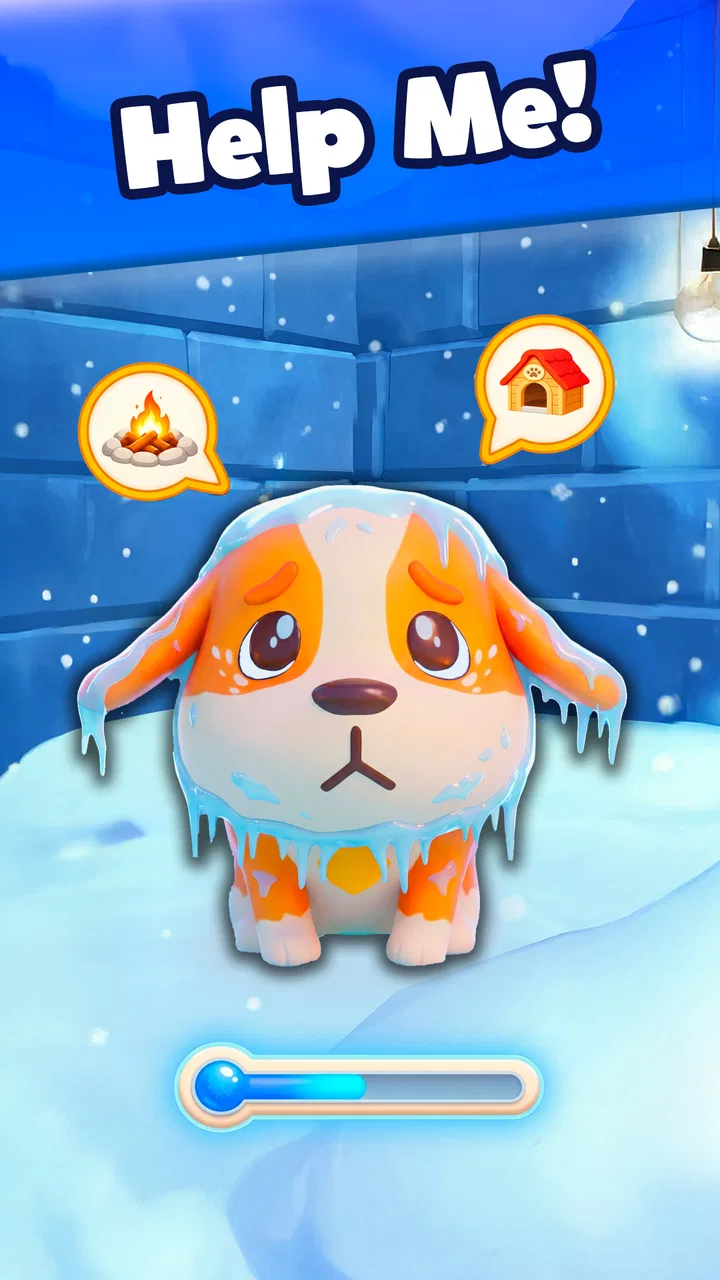
Dog Escape: Cute Pet Care Life
- 4.4
- Rating
- 50.00M
- Installs
- Free
- Price

 Analysis by App-foxy
I went into Dog Escape: Cute Pet Care Life expecting a light virtual-pet game, but its appeal comes from combining everyday puppy care with short escape-puzzle moments. I adopt the dog, look after its immediate needs, and then help it work through situations that require a little attention rather than fast reflexes. That blend gives the game a clear rhythm: do something for the puppy, see an immediate response, earn a sense of progress, and then return for another small task.
That structure makes it easy to play in spare moments. I can open it when I have a few minutes, complete something manageable, and stop without feeling that I have abandoned a long mission. At the same time, the cute presentation is not the only reason to stay. The game works best when I treat the puppy’s care routine and the escape challenges as two parts of the same loop instead of expecting a deep simulation or a full puzzle adventure.
How the puppy-care loop actually feels
I find the puppy-care loop works best when I let it set the pace rather than treating each interaction as a chore to clear. The useful question is not just what I can tap, but whether a care action or a closer look at the puzzle makes more sense next; that small pause helps keep the experience relaxed. It also gives me a practical way to tell whether a confusing moment comes from my approach or from something outside the game.
You May Also Like

 Blood Strike: 2.5 Anniversary
Blood Strike’s Loadouts Turn Every Drop Into a Tactical Gamble
A close look at Blood Strike’s custom loadouts: how fast access to signature weapons reshapes its battle royale rhythm, rewards preparation, and narrows the gap between fights.

 Pandora - Music & Podcasts
Pandora’s Music Is Easy to Start, but Harder to Recover
Pandora’s strength is its low-effort path from a seed to a station. Its weak spot is how much confidence it asks you to place in connection, setup, and quiet recovery.

 8 Ball Pool
 Is Built on Rivalries, Rematches, and Routine
A close look at the rivalries, rematches, shared routines, and unanswered safety questions that turn a quick pool match into a persistent mobile community.

 Samsung Music
’s Quiet Strength Is Playing What You Already Own
Its reach comes less from spectacle than from dependable access to a personal library. That simplicity is both the app’s strongest retention engine and its ceiling.

 AccuWeather: Weather Radar
AccuWeather Review: A Quick, Clear Forecast for Everyday Decisions
For everyday plans, the best forecast is the one you can understand quickly. AccuWeather makes rain timing, radar, and local conditions easy to act on, with a few trade-offs.

 Hill Climb Racing
Why Hill Climb Racing Still Turns Crashes Into One More Run
A tiny car, a bumpy hill and one more upgrade: Hill Climb Racing keeps resurfacing because its simple chaos makes every near-miss feel personal.
More From Our News Desk
View All News


The first action gives the game its direction
The opening idea is simple: I take responsibility for a virtual puppy. Feeding and playing are not presented as abstract menus in my experience; they establish the basic relationship that makes the later escape situations feel meaningful. The puppy is not merely a token I move through levels. Its presence gives each action a small emotional payoff, even when the underlying task is straightforward.
The first useful habit is to pay attention to what the game is asking before tapping quickly. A new player may be tempted to treat every screen as a sequence of obvious buttons, but the escape-puzzle side rewards observation. I look at the surroundings, identify what can be interacted with, and consider whether the safest move is to act immediately or prepare the puppy first. That pause is especially helpful on a phone, where a rushed tap can make a simple situation feel more confusing than it needs to be.
For a child or a casual player, this is a friendly entry point into simulation games. There is no need to learn a complicated economy, manage a large collection, or memorize extensive controls. The actions are understandable because they are tied to familiar pet-care ideas. Feed the dog, play with it, and help it get through the next obstacle. I found that clarity more important than depth during the first sessions.
The trade-off is that experienced simulation players may find the opening gentle. This is not the right choice if I want detailed animal behavior, realistic care schedules, or a large home-building system. Its puppy is designed to support a playful puzzle loop, not to reproduce the responsibilities of owning a real dog. That distinction matters because the game is most enjoyable when I accept its compact, cheerful scale.
Every action needs a visible response
The strongest part of the design is the feedback rhythm. I perform a care action or solve a small obstacle, and the game gives me a reason to continue. The response may be the puppy’s reaction, the feeling of clearing a situation, or the sense that I have moved the current activity forward. Those small confirmations prevent the game from feeling like a list of chores.
I prefer to play it with a “one task at a time” mindset. Instead of searching for a perfect long-term strategy, I focus on the immediate problem: what does the puppy need, what is blocking the escape, and which interaction is most likely to change the scene? This approach keeps the pace relaxed and makes the game suitable for short breaks. It also reduces the frustration that can come from tapping every object without understanding why it matters.
There is a useful difference between the two sides of the loop. Care actions are comforting and predictable, while escape puzzles introduce uncertainty. The pet-care moments let me settle into the session; the puzzles ask me to pay closer attention. Moving between them gives the game more texture than a basic feeding simulator, but it also means players looking for one consistent style may feel the shift.
In a realistic everyday scenario, I could play while waiting for a bus or during a short break between errands. I would complete a feeding or play interaction, try the next escape challenge, and close the game after reaching a natural stopping point. The experience does not demand that I reserve a long uninterrupted evening. That is one of its practical strengths, especially for people who enjoy mobile games in brief visits rather than extended sessions.
Small rewards keep the next attempt attractive
The reward is not only about collecting something. The more important payoff is seeing the puppy cared for and watching the current situation resolve. That combination gives the game a soft sense of progress. I am rewarded for understanding the immediate task, but I am also rewarded for returning to the pet-care relationship.
This is where the game differs from a conventional puzzle title. In a pure puzzle game, the satisfaction usually ends when I find the solution. Here, solving the escape situation feeds back into the larger pet experience. The puppy is the reason I care about the outcome, and the care activities give me a reason to continue after the puzzle itself is finished.
That design can be particularly appealing to younger players who enjoy animals but may not want the pressure of a competitive game. The content rating is Everyone, and the tone is clearly built around approachable pet interaction rather than harsh conflict. Parents should still remember that the game is free with optional in-app purchases ranging from $0.99 to $119.99 per item. I would set expectations before handing the phone to a child, because a friendly game can still contain purchase choices that deserve adult supervision.
For my own play, I treat any optional purchase as something to ignore until I understand whether it genuinely improves the experience. The core appeal is the action-feedback cycle, not the idea of spending to rush through it. If a player dislikes in-app purchase prompts in free games, that may be a reason to choose a paid alternative with a simpler commercial model. The game is free to start, but “free” does not mean every possible convenience is included without cost.
Why another session begins
The reset is gentle rather than dramatic. After completing a task or reaching a stopping point, I am left with a puppy that still invites another interaction and a new situation to consider. That is the reason the next session begins. I am not simply replaying the same screen for its own sake; I am returning to the familiar care routine and looking for the next small problem to solve.
This reset works because the game keeps the scale manageable. I do not need to remember a complicated story or rebuild a large strategy after closing it. When I return, I can reorient myself through the puppy and the current activity. That makes it a good companion game for players who often forget where they left off in longer titles.
There is also a possible weakness in this structure. Players who need a strong narrative arc, increasingly demanding mechanics, or a clear competitive goal may find the reset too soft. The game encourages repetition through affection and bite-sized challenges, not through a dramatic campaign. I would skip it if my ideal mobile experience is a deep management simulator with long-term planning and consequences that carry across every decision.
Another practical point is the device requirement. The game supports Android versions from 7.0 onward, which makes it accessible to many older devices, although performance can still vary depending on the phone. I would close other demanding apps if the game feels slow, especially on an older handset. That is a simple habit, but it helps preserve the relaxed rhythm that the design depends on.
What makes it different from the usual alternatives
Compared with a traditional virtual-pet game, this title gives me more to do than simply maintaining a routine. The escape-puzzle layer adds moments where I need to inspect the environment and make a choice. Compared with a dedicated puzzle game, it has less emphasis on pure problem-solving because the puppy-care activities soften the experience and provide the emotional center.
That middle position is both its identity and its limitation. Someone choosing between a serious puzzle game and a detailed pet simulator may find this less specialized than either alternative. I see it as a better fit for players who want the two moods together: a little caretaking, a little discovery, and a reason to check back without committing to a demanding campaign.
The developer, Sunday.gg, has positioned the experience around a very readable concept, and the audience response suggests that the formula connects with a broad group of players. It has an average rating of 4.5 from around 141 thousand ratings, with more than 10 million installs. Those figures do not replace personal taste, but they do help explain why the game feels designed for immediate accessibility rather than for a narrow specialist audience.
The current version is 1.40.0, so I would keep the installation updated through the normal app store process. Updates can matter in a game built around many small interactions because a minor issue in one puzzle or care action can interrupt the entire loop. I also like checking that the phone has enough free space and a stable connection before a longer play session, even though my main use for the game is short visits.
Three habits that improve the experience
My first tip is to slow down at the start of an escape situation. I look for the interaction that changes the puppy’s route instead of tapping every visible object. This makes the puzzle side feel more intentional and helps avoid the impression that success depends on random experimentation.
My second tip is to use care actions as a natural reset between puzzles. If I have just spent time examining an escape problem, feeding or playing with the puppy gives me a calmer transition before I attempt the next challenge. This is more enjoyable than treating the care system as something to rush through on the way to the “real” content.
My third tip is to decide in advance whether I am playing for completion or relaxation. If I want to finish a specific activity, I focus on the puzzle and accept that the pet interactions are part of the route. If I am using the game to unwind, I let the puppy-care moments lead and stop whenever the session feels complete. That choice prevents me from judging a gentle game by the standards of a high-pressure one.
A fourth consideration is purchase discipline. Because the game is free and includes optional items with a wide price range, I would avoid making a purchase during the first session. I would first learn whether the normal action-feedback-reward cycle already gives me enough satisfaction. For many casual players, it probably will; for others, the presence of optional spending may be an unnecessary distraction.
Who should play it, and who should pass
I recommend it to someone who wants a friendly simulation game with a clear animal theme and short puzzle interruptions. It is especially suitable for casual players, families looking for an approachable game, and anyone who enjoys returning to a familiar virtual pet without managing a complicated world. The Everyone age rating reinforces that accessible direction.
I would be more cautious about recommending it to players who want realism. Caring for this puppy is a game activity, not a substitute for learning about actual dog ownership. I would also point puzzle enthusiasts toward a dedicated puzzle title if they want layered logic, escalating difficulty, or a campaign built entirely around solving problems. Likewise, players who dislike free-to-play purchase options may be happier with a premium pet game.
My biggest limitation is the possibility of repetition. The central loop is intentionally easy to understand, and that is helpful at first. Over time, a player who needs constant novelty may feel that the same basic pattern—care, interact, resolve, return—does not provide enough variety. The game’s success depends on whether that repetition feels comforting or predictable to you.
My verdict on the complete loop
Dog Escape: Cute Pet Care Life works because its loop is easy to read and pleasant to repeat. I take an action for the puppy, receive an immediate response, gain the satisfaction of solving or completing something, and then return later because another small interaction is waiting. The reset is not a punishment or a demand; it is an invitation to continue the routine when I feel like it.
I would not describe it as a deep simulation or a demanding puzzle adventure. Its value is in the combination. The puppy gives the puzzles warmth, while the puzzles stop the care routine from becoming completely passive. That balance makes it more distinctive than a basic virtual pet and more relaxed than a conventional puzzle game.
As a free simulation game from Sunday.gg, it is easy to try, supports Android 7.0 and later, and offers a welcoming experience for an Everyone audience. I would approach the optional purchases carefully and keep expectations realistic about depth. If you want a cheerful, bite-sized game that gives you a reason to check in, solve a small escape problem, and care for a virtual dog, I think it is worth trying. If you need complex management, serious puzzle progression, or a purchase-free experience, another option will likely suit you better.
FAQs for Dog Escape: Cute Pet Care Life
01What is Dog Escape: Cute Pet Care Life about?
Dog Escape: Cute Pet Care Life is an engaging mobile game that combines puzzle-solving with pet care. Players assist adorable dogs in escaping tricky situations while managing their care needs like feeding, grooming, and playtime. The game offers a fun blend of strategy and nurturing, making it perfect for animal lovers and puzzle enthusiasts.
02Is Dog Escape: Cute Pet Care Life free to play?
Yes, Dog Escape: Cute Pet Care Life is free to download and play on both Android and iOS devices. However, it offers in-app purchases that enhance gameplay, such as special items, hints, or aesthetic customizations for your pet. Players can enjoy the game fully without spending money, but purchases can accelerate progress.
03What are the main features of Dog Escape: Cute Pet Care Life?
The game features a variety of puzzles and rescue missions that players must solve to help their pet escape. It also includes a virtual pet care system where players feed, bathe, and play with their dogs. Daily challenges, customizable pet accessories, and interactive environments add to the game’s appeal and replayability.
04Does Dog Escape: Cute Pet Care Life require an internet connection?
Dog Escape: Cute Pet Care Life can be played offline, allowing players to enjoy the game without a constant internet connection. However, some features like in-app purchases, cloud saves, and leaderboards require online access. Playing online ensures you can enjoy all the interactive and social aspects of the game.
05Is Dog Escape: Cute Pet Care Life suitable for children?
Yes, Dog Escape: Cute Pet Care Life is designed to be family-friendly and is suitable for children. The game features cute graphics, easy-to-understand puzzles, and a gentle learning curve. Parents can feel confident that the content is appropriate, while kids will enjoy the fun challenges and caring for their virtual pets.
Pros
- Engaging gameplay with adorable graphics.
- Easy to understand for all age groups.
- Frequent updates with new levels.
- No intrusive ads during gameplay.
- Encourages problem-solving skills.
Cons
- Requires internet for certain features.
- Some levels can be overly challenging.
- Limited customization options for pets.
- In-app purchases can be expensive.
- Occasional bugs in older devices.

Dog Escape: Cute Pet Care Life
Gallery